It all started with Su doing a bit of quick family research as background for a story she’s writing. I thought I might try the same for my own family. The Polish folks on Dad’s side and the French Canadians on your father’s side (my Gramps) remain shrouded in deep mystery. But the Irish, Ulster-Scots and English on your mother’s side (my Grammy) proved surprisingly easy to find — as if they wanted me to find them. Nothing I’ve learned required more than lounging on the couch and searching freely available resources on the Internet.
So what did I find? Well, we share a line of Irish, Ulster-Scots and English ancestors that I knew little about. Grammy didn’t talk a lot about her family (at least not to me) and now I sort of know why. It seems she was disconnected from her family history by a combination of then-recent family “scandals” and the fading of connections through death and distance.
The Irish , Ulster-Scots and English proved surprisingly easy to find — as if they wanted me to find them.
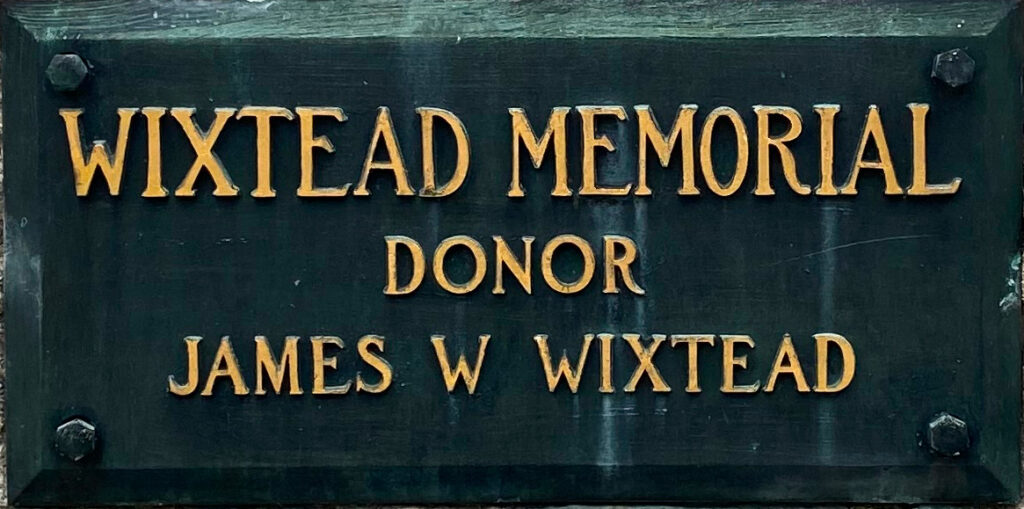
Your mother’s parents (your Irish-American grandfather, Thomas E. Wixtead and your English-Canadian grandmother Lena Belle Johnson) were not truly at home in either the worlds the County Limerick Irish had built in Douglas, Massachusetts, or the English Canadians had made in Berwick, Nova Scotia. The horrific Great Famine in Ireland still burned in living memory and the Irish were none too keen on the English or the Scottish who had settled in the Ulster Plantation (northern Ireland). And there were the “scandals” of an Ulster-Scots/English Protestant woman (Lena was raised a Baptist), having a child out of wedlock with an Irish Catholic man and their marrying some six years later. So, given the social, religious and political currents of that time, it’s not surprising that Grammy just didn’t want to talk about it at all.
But I wish she had. Because Grammy’s parents’ story was a bit like Romeo and Juliette, but with a happier story arc, a dizzying number of international border crossings, and enduring questions about modern constructs of nationality and ethnicity (who was American? who was Canadian? what did it mean to be Irish or English or Scottish?)